Misha Salma: A Delicate Script for Creative Projects
There I was, staring at a blank brand board, trying to find the right tone for a new boutique skincare line. The client wanted something elegant but approachable, something that felt personal without being too formal. I reached for my usual suspects—serif fonts for tradition, sans serifs for modernity—but nothing quite fit. That’s when I tried Misha Salma.
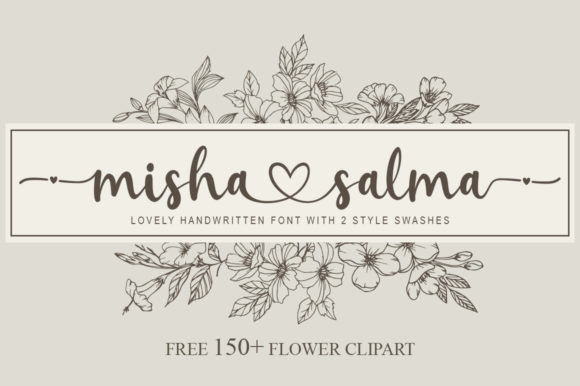
Misha Salma is a refined and dainty handwritten font. Its delicate strokes and soft curves give it a romantic, almost whimsical feel. It’s not overly ornate, but it has enough character to stand out without overwhelming the design. The font feels like a handwritten note from a friend, which makes it perfect for branding that aims to feel authentic and heartfelt.
Testing Misha Salma in Real Branding Work
I first used Misha Salma on a logo concept. The client was looking for a name that felt both professional and warm, and the font provided just that balance. On a business card, it looked clean and readable, even at smaller sizes. I paired it with a simple sans serif for the tagline, and the contrast worked well—Misha Salma brought the personality, while the sans serif kept things grounded.
On a packaging mockup, Misha Salma added a touch of sophistication. The font didn’t dominate the design, but it made an impression. It was especially effective on product labels, where its dainty style gave a sense of care and craftsmanship. I noticed that the font had a few alternate characters and swashes, which allowed for subtle variations that kept the design from feeling repetitive.
Where Misha Salma Shines
Misha Salma excels as a display or headline font. It’s not meant for long paragraphs, but as a focal point, it works beautifully. In web design, I used it for a homepage hero section. The font’s elegance complemented the minimalist layout, and it added a personal touch that felt unique. On social media graphics, it stood out against bold backgrounds, making it ideal for promotional posts or Instagram stories.
In editorial design, Misha Salma can add a human element to layouts. Whether it’s a magazine spread or a brochure, the font brings warmth and intimacy. It’s also great for posters or flyers where a handwritten feel can make the message more engaging.
Limitations and Considerations
While Misha Salma is beautiful, it’s not a one-size-fits-all solution. In projects requiring high readability, such as body text or signage, it might not be the best choice. At small sizes, some of the finer details can get lost, which could affect legibility. For formal corporate use, it may come across as too casual or unstructured.
It’s also important to consider multilingual support. If the project involves other languages, checking whether Misha Salma supports those scripts is essential. Most premium fonts include this, but it’s always good to verify before finalizing a design.
Pairing Misha Salma with Other Fonts
When pairing Misha Salma with other typefaces, it’s best to go for contrasts that highlight its strengths. A classic serif font can provide stability, while a modern sans serif can offer a clean, contemporary edge. For a more cohesive look, pairing it with another script font can create a layered, elegant effect.
I found that using Misha Salma as an accent font—such as for headings or subheadings—worked best. It adds visual interest without competing with the main body text. When used sparingly, it maintains its charm without becoming overwhelming.
Practical Tips for Using Misha Salma
Before using Misha Salma in client work, test it across different mediums. Print it on a business card, place it on a packaging mockup, and see how it looks on a website. Pay attention to how it scales and whether it retains its clarity at various sizes.
Also, check the font’s licensing terms. Make sure it’s suitable for commercial use, especially if you’re designing for a brand that will be sold or distributed. Some fonts have restrictions on web use or resale, so understanding these is crucial.
Finally, don’t be afraid to experiment. Misha Salma is versatile enough to adapt to different styles and projects. Whether you’re working on a boutique identity, a handmade shop, or a creative studio, it can add a personal, artistic touch that sets your design apart.